Article: Meteorite Dial Watches: A Complete Guide for Collectors
Meteorite Dial Watches: A Complete Guide for Collectors
What is a Meteorite Dial?
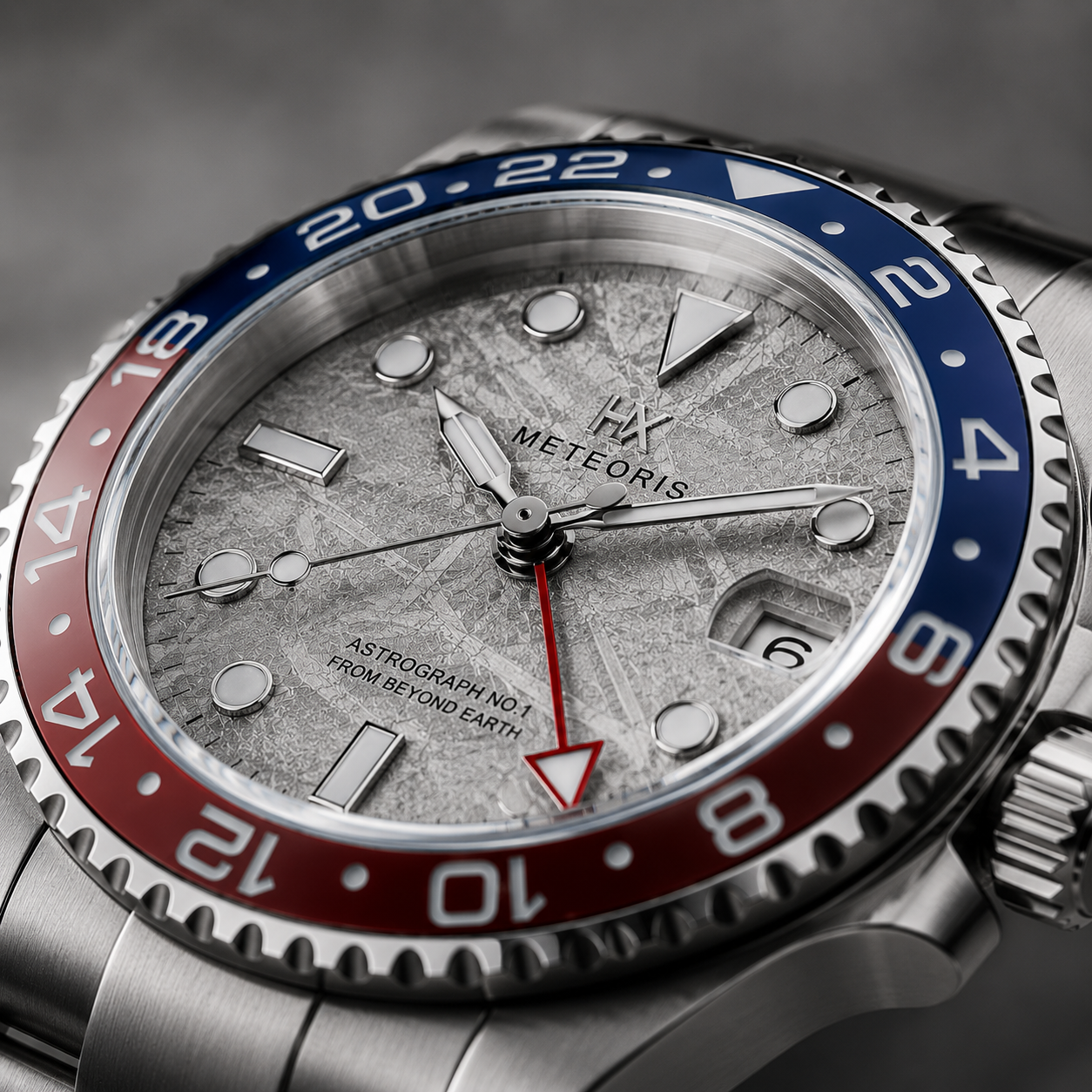
A meteorite dial is exactly what it sounds like — a watch dial crafted from an actual fragment of a meteorite that has travelled through space and landed on Earth. These extraordinary dials transform a timepiece into something genuinely cosmic: a wearable relic of the universe, billions of years in the making.
The most commonly used meteorite for watch dials is Gibeon meteorite, originating from a meteorite shower that fell in Namibia thousands of years ago. Its iron-nickel composition and slow cooling over millennia in space create the material's most iconic feature: the Widmanstätten pattern.
The Widmanstätten Pattern
When a Gibeon meteorite is cut, polished, and acid-etched, it reveals a breathtaking crystalline structure — intersecting bands of nickel-iron alloys (kamacite and taenite) that formed over billions of years as the meteorite cooled in space. This geometric, organic pattern is:
- Completely unique: No two meteorite dials share the same pattern. Every watch is, in the most literal sense, one of a kind.
- Impossible to replicate: No human process or manufacturing technique can reproduce the Widmanstätten pattern. It exists only because of the conditions of deep space.
- Billions of years old: The meteorite material used in watch dials is typically 4.5 billion years old — older than the Earth itself.
How is a Meteorite Dial Made?
Working with meteorite is exceptionally challenging. The material is brittle, difficult to machine, and prone to oxidation. Creating a meteorite dial requires:
- Slicing the meteorite into thin sections using diamond-tipped tools.
- Grinding and polishing the surface to the required thickness — often less than 0.5mm.
- Acid-etching to reveal the Widmanstätten pattern.
- Applying a protective coating or lacquer to prevent rust, as meteorite contains iron and will oxidise if left untreated.
- Cutting apertures for hands, indices, and complications with extraordinary precision.
The result is a dial of unparalleled rarity and visual drama.
What to Look for When Buying a Meteorite Dial Watch
- Certification of authenticity: A reputable watchmaker will provide documentation confirming the meteorite's origin and composition.
- Protective treatment: Ensure the dial has been properly sealed or lacquered to guard against oxidation over time.
- Pattern visibility: The best meteorite dials are cut and etched to maximise the visibility of the Widmanstätten pattern — look for strong contrast and clarity.
- Complementary case material: Meteorite dials pair exceptionally well with titanium, forged carbon, or precious metal cases. Consider how the case material frames and enhances the dial.
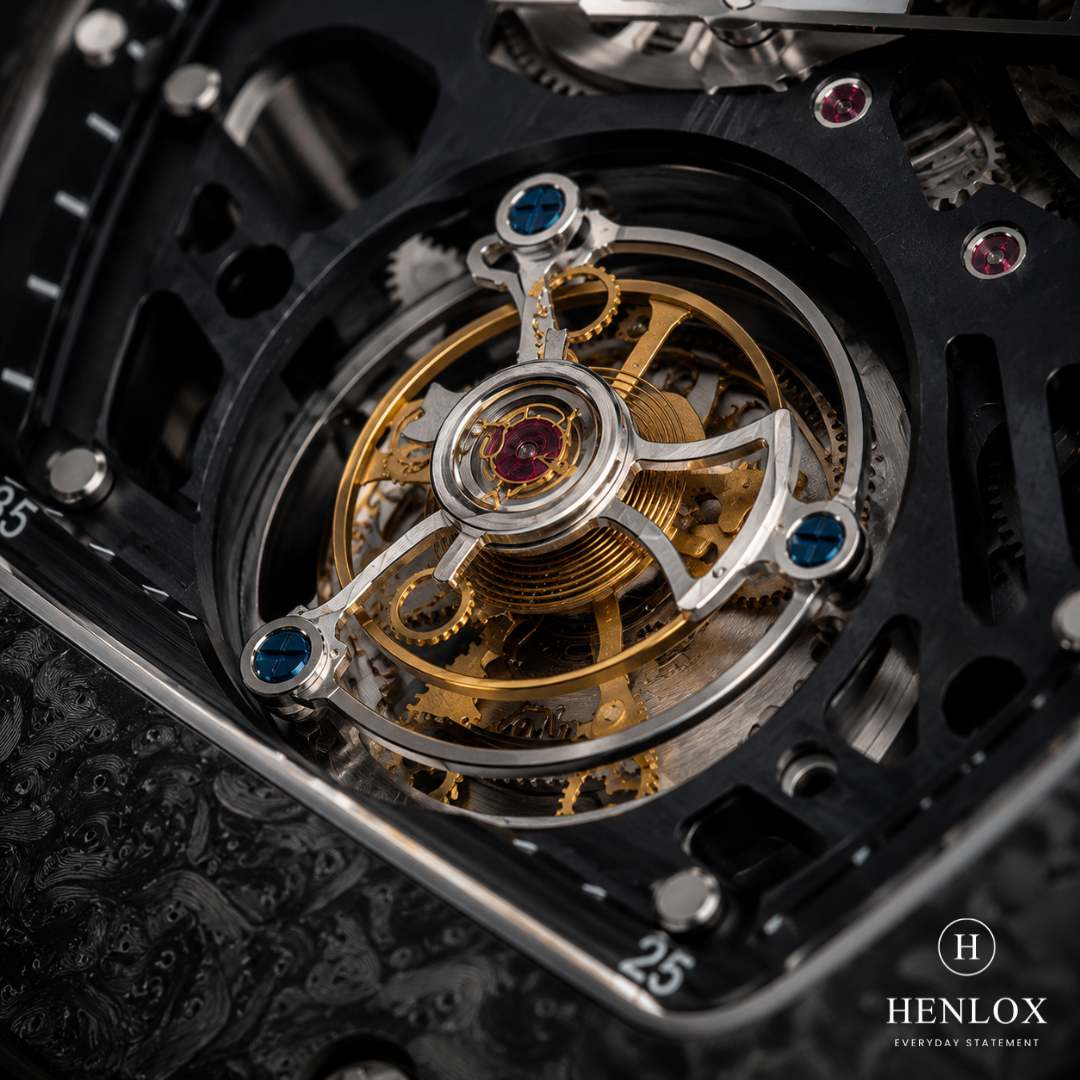
- Complications: A tourbillon or other high complication paired with a meteorite dial creates a watch of extraordinary presence — where the movement and the dial are both works of art in their own right.
Caring for a Meteorite Dial Watch
Meteorite dials require a degree of care beyond standard watches. Avoid prolonged exposure to moisture, and have the watch serviced regularly to ensure the protective coating remains intact. With proper care, a meteorite dial will retain its extraordinary appearance for generations.
A Piece of the Universe on Your Wrist
Owning a meteorite dial watch is unlike any other collecting experience. It is not merely a luxury object — it is a fragment of the cosmos, shaped by forces and timescales beyond human comprehension, and set into one of mankind's most refined mechanical achievements.
Browse our collection of meteorite dial watches and find the one that speaks to you.